




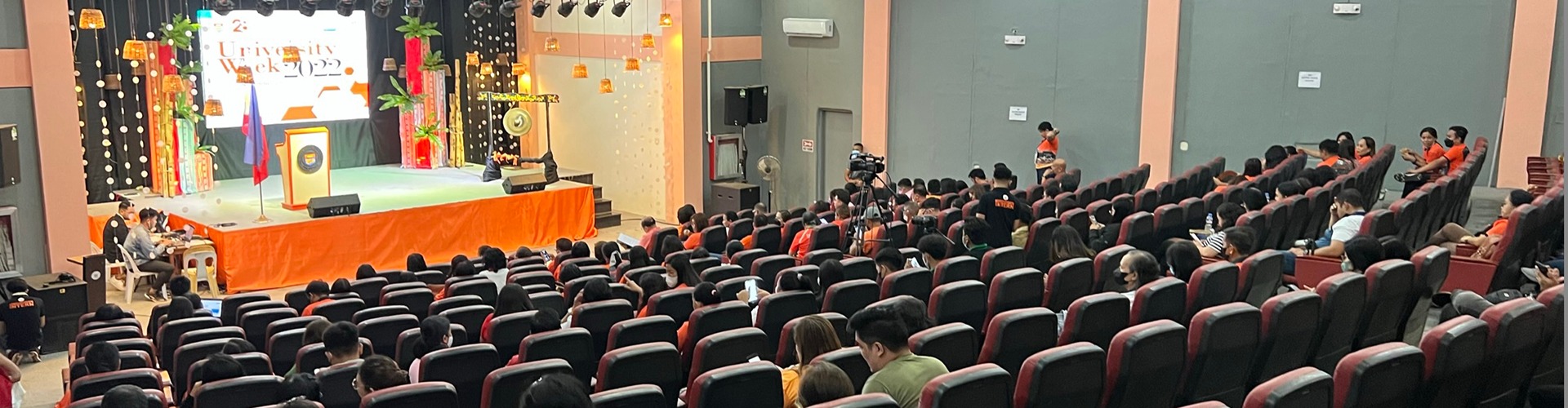


Palawan State University’s Student Affairs and Services Division (SASD) took a significant step in prioritizing mental health by launching their new program themed, “Kalinawan ng Diwa: Inculcating Mindful Living for Every PSUan.” Led by Dr. Carlos Alfonso C. Salvador, Vice President for Student Affairs and Services (VPSAS), and Prof. Lucia Fresnillo, head of the Student Welfare Services (SWS) Department, the program was unveiled yesterday, December 6, at the PSU Amphitheater.
The launch event was attended by esteemed guests including Dr. Ramon M. Docto, University President, Dr. Salvador, VPSAS, Dr. Elucila M. Sespeñe, Vice President for Academic Affairs (VPAA), Dr. Amabel S. Liao, Vice President for Finance and Administration (VPFA), Dr. Cheryl Anne C. Dator, University Registrar, Prof. Jose Felomino Fernandez III, SASD Directors and staff, as well as students from various colleges and organizations.
Collaborating with the Rotaract Club of Puerto Princesa – Palawan State University Chapter and the Psychology Society of the College of Arts and Humanities (CAH), the program kicked off with Prof. Fresnillo delivering a warm welcome address, followed by a message from the University President.
Dr. Docto, highlighted the significance of the newly launched mental health program for the entire Palawan State University, emphasizing that it is a breakthrough for the institution and an opportunity to bring to light a topic that often remains hidden but affects everyone. He emphasized the availability of support systems within the university, including the SASD, Office of the VPSAS, guidance counselors, and even the office of the president, where students can seek help. Dr. Docto firmly stated, “Asking for help is a sign of strength, not a weakness.” President Docto also called for the collective effort to build a healthy community at Palawan State University, where everyone feels valued, supported, and empowered to prioritize their mental well-being.
Following the president’s message, Hon. Jo Mark M. Libre, Commissioner of the Commission on Higher Education (CHED), delivered a challenge to mental health advocates. Comm. Libre emphasized that addressing mental health concerns contributes to the overall welfare of the university. He highlighted the importance of seeking help, particularly from the guidance counselors on campus, stating, “If you are tired, rest. If you are very tired, have a moment with yourself.”
The messages from both Dr. Docto and Comm. Libre reflect the commitment of Palawan State University and CHED to promoting mental health and well-being among students. By encouraging open dialogue and seeking appropriate support, they aim to create an environment that nurtures the holistic development of students and ensures their overall success.
In response to the challenge, various student organizations stepped forward to deliver messages of acceptance and support. Representing the Rotaract Club Puerto Princesa – PSU, President Marc Krysteena Beatriz Luciano shared her message, while Rangie Izydore Capales, President of the PSU – Psychology Society, and Abegail Mae J. Rafols, representative of the PSU – Mental Health Volunteers, also expressed their support for mental health advocacy.
Following these inspiring messages, a symbolic thumb printing ceremony involving mental health advocates was conducted, with Dr. Salvador and other university officials leading the momentous activity.
In the meantime, Prof. Enola Gay Misajon-Pedernal, a Registered Psychologist and Chairperson of the Behavioral Sciences Department in the College of Arts and Humanities (CAH), along with Mr. Gregorio S. Naldo Jr., also a Registered Psychologist and CAH Faculty, delivered informative talks on mental health. Prof. Pedernal discussed the Importance of Mental Health in the School Setting, while Mr. Naldo Jr. focused on the topic of Juggling Academics and Self-Care: Nurturing Your Mental Health.
To conclude the program, Ms. Vina Karina Baaco, a guidance practitioner, guided the students in crafting letters to their future selves, providing an opportunity for self-reflection and setting personal goals related to their mental well-being.
The launching of the mental health program is anchored to the Republic Act (RA) 11036 known as the Mental Health Act and the mandate from CHED in regard to the approved House Bill 6416 entitled as an act strengthening the mental health services of state universities and colleges (SUCs) and appropriating funds therefor.
RA 11036 is an act Establishing a National Mental Health Policy for the purpose of enhancing the delivery of Integrated Mental Health Services, promoting and protecting the rights of persons utilizing Psychosocial Health Services, appropriating funds therefor and other purposes, while the HB 6416 seeks to strengthen the mental health services of SUCs and appropriates budget for it. Under Section 4 of the said House Bill, the Commission on Higher Education (CHED) shall require all SUCs to establish a Mental Health Office (MHO) in all their campuses, subject to the rules and regulations of the Civil Service Commission 3 (CSC) and the Department of Budget and Management (DBM), and the policies, standards, and guidelines of the CHED.
The SWS Department and the SASD aims to strengthen the students’ awareness and the mental health programs and services that the university provides for its constituents. They aspire to continue the current initiatives and activities such as the individual and group counseling in purpose of creating a safe space, breaking the stigma, and enable the guidance office to be just within reach among the PalawanSUans.
The launch of the Mental Health Program reflects Palawan State University’s commitment to nurturing the holistic development of its students and fostering a supportive campus environment. By prioritizing mental health, PSU is taking proactive steps to address the well-being of its students and ensure their success inside and outside the classroom.
The SASD and its partners look forward to the positive impact this program will have on the PSU community, empowering students to prioritize their mental health and encouraging open conversations about mental well-being.


